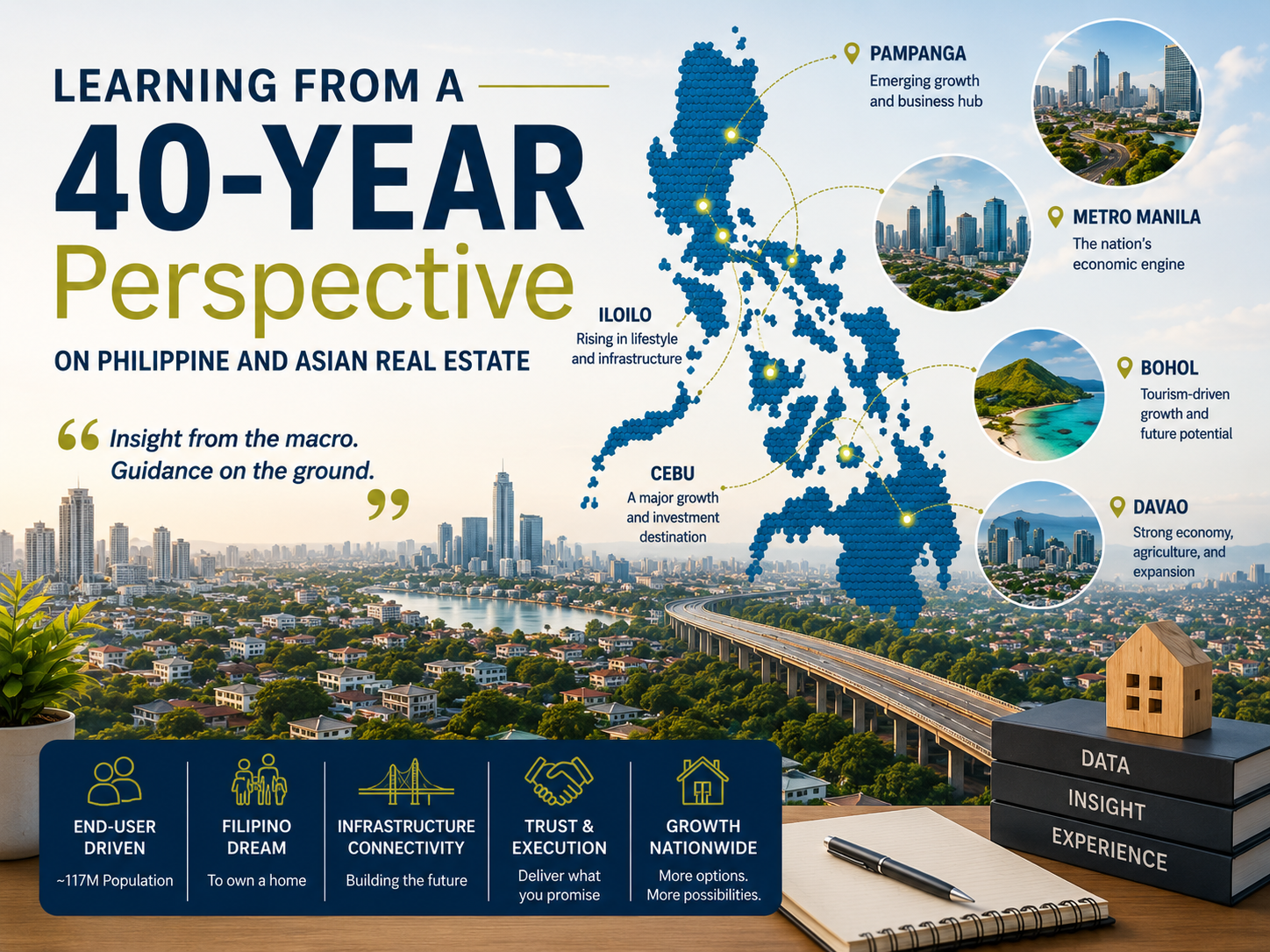
I recently read an article featuring Prof Enrique M. Soriano III, sharing a 40-year perspective on Philippine and Asian real estate. HERE
Here are some of the lines in the article that resonated with me:
– – –
“Growth is becoming geographically distributed.”
When I started in 2005, it was just Makati CBD and BGC just started. In 2007, Ayala Land launched Nuvali in Laguna. And now, there are more growth centers nationwide. Hindi lang with Ayala Land, but other developers as well.
I remember seeing a map of Alveo and other Ayala developments across the Philippines. I got excited seeing a wider map because for me, it meant more options and more possibilities for my clients.
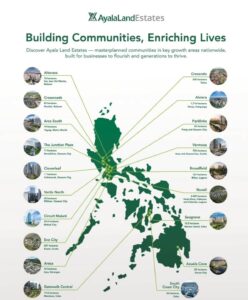
I started out as a focused seller — knowing my project inside and out na kahit tulog kaya ko ipresent and project ko. hehe
But when I started seeing the bigger picture, I realized that it is not about pushing just one property. It’s about understanding where growth is happening and who it’s right for.
Growth is no longer concentrated in one place. It’s spread across different regions, different cities, different stages of development.
And also, now with askME, I help spearhead accreditations across multiple developers not just to have more inventory, but to have a wider range of options for our clients.
───
“The market is end-user driven.”
In the Philippines, this connects to something deeper.
The Filipino dream is simple, but powerful:
To own a home.
I often explain it this way to my clients here and overseas:
The Philippines remains a consumer-driven market, supported by our ~117 million population.
A young population.
A growing working class.
Families that prioritize education.
Almost every parent dreams of one thing: that their children finish school.
“Okay na ako, basta makatapos lang sila.”
And then those children:
- graduate
- find jobs
- start earning
- start building their own lives
…and so they become the next set of homeowners.
Then we have our OFWs.
They send money home not just to save, but to support:
- tuition fees for school
- daily expenses
- home improvements
- eventually, property for them and their families
So when we say “end-user driven,” para sa akin, this is what it looks like:
A continuous cycle that is very real in every Filipino household.
───
“Anchored in local economic growth – infra, jobs, connectivity.”
This part, I’ve seen over time.
My real estate journey grew alongside different government programs: from Public-Private Partnerships, to Build, Build, Build, to Build Better More.
Different names but the same idea: Infrastructure being pushed forward often with private sector participation.
Over the years, I’ve noticed that when projects are pushed forward with private sector involvement, there is usually a stronger push toward completion.
I’ve seen roads and bridges being completed, access improving, and areas becoming more connected. And naturally because of that, land values followed.
───
“For developers, execution is everything. Deliver what you promise.”
When I do roadshows or client meetings, I would sometimes get sad strories of clients being scammed by agents and even family members. The movie of Vice Ganda called The Breadwinner happens in real life wherein you work hard to send money home only to realize that you got scammed and no property was built. On top of that, developers don’t deliver the property as promised.
Our clients are not just buying property. Especially for preselling (off the plan), they are buying into a promise. We present with floor plan, lot plan, vicinity map, etc.
And this is exactly why, in askME, we are intentional about who we work with.
We accredit developers and suppliers based on:
- track record
- delivery
- consistency
We understand that every client’s goal is simple:
That they receive the property they worked hard for.
───
People like Prof Enrique M. Soriano III, Rex Mendoza, my fave, and firms like Colliers and Leechiu Property Consultants speak in data, models, and macro trends.
And I listen, I read, I learn from them because I also need to see their perspective to help me understand the bigger picture more clearly. I’m grateful to them.
Then I bring that into my work which has always been on the ground, hoping to help my clients understand before they jump in to purchase.